AI-driven operations are only as effective as the data they can access.
To bring authoritative DNS, DHCP, and IP address management (together known as DDI) context into Cisco’s agentic network operations environment, BlueCat is now integrated with Cisco Cloud Control.
BlueCat provides Cisco Cloud Control with trusted infrastructure intelligence that AI agents can use during investigation, troubleshooting, and remediation workflows. The result is better operational context, faster root cause analysis, and more informed decision-making across networking, security, observability, compute, and collaboration domains.
In this post, we first explore how BlueCat’s integration with Cisco Cloud Control works. Next, we highlight why DDI data matters for AI-based network operations. Finally, we examine how BlueCat improves AI-driven investigations and highlight its role in the future of agentic operations.
What is the BlueCat integration with Cisco Cloud Control?
Cisco selected BlueCat as one of its ecosystem integration partners supporting Cisco Cloud Control through Model Context Protocol (MCP) integrations. BlueCat MCP servers expose authoritative DDI data, enabling AI-driven workflows to access trusted network infrastructure information during operational investigations.
Cisco Cloud Control serves as Cisco’s unified platform for IT operations. Within the platform, Cisco AI Canvas provides a collaborative workspace where IT teams and AI agents investigate, correlate, and resolve issues across operational domains. Cisco partner integrations extend the platform by making additional data sources and capabilities available to those workflows.
BlueCat’s role is straightforward: We provide authoritative infrastructure context that helps AI systems understand how networks are configured, connected, named, addressed, and governed.
The initial integration includes BlueCat Integrity and BlueCat Edge, but the scope of integrations may evolve as the ecosystem expands.
Why DDI data matters for AI-based network operations
Every network investigation eventually comes back to infrastructure.
When an application slows down, a service becomes unavailable, or a security event occurs, teams need accurate information about IP assignments; intent and role data for IP addresses, DHCP, DNS records; connectivity relationships; and infrastructure policies to quickly contextualize the event. This is especially true if the devices are unauthenticated and lack user information.
Without that context, AI systems will reason on incomplete information.
BlueCat helps close that gap by providing authoritative DDI data that AI agents can use in operational investigations. Cisco’s guidance for ecosystem integrations emphasizes that AI agents deliver better outcomes when they can reason on trusted, domain-specific data sources. For network operations, DDI data is often a key source of truth.
In practical terms, that means:
- More accurate root-cause investigations
- Better infrastructure awareness
- Improved operational visibility
- Faster movement from alert to resolution
- Reduced context switching between tools
These outcomes become increasingly important as organizations adopt agentic operations models and seek to automate more operational workflows.
How BlueCat improves AI-driven investigations
For organizations managing complex hybrid environments, authoritative network intelligence is a critical component of operational decision-making.
By integrating BlueCat with Cisco Cloud Control, AI agents have access to authoritative infrastructure data alongside data from the rest of your operational environment. This allows investigations to incorporate DDI context that might otherwise require manual research across multiple systems.
Network admins no longer need to switch between separate tools to understand infrastructure relationships. BlueCat context is available where investigations are already underway.
Cisco highlights three primary benefits from its ecosystem partner integrations:
- AI agents work with more context.
- Teams spend less time moving between tools.
- Investigations produce better answers and faster resolutions.
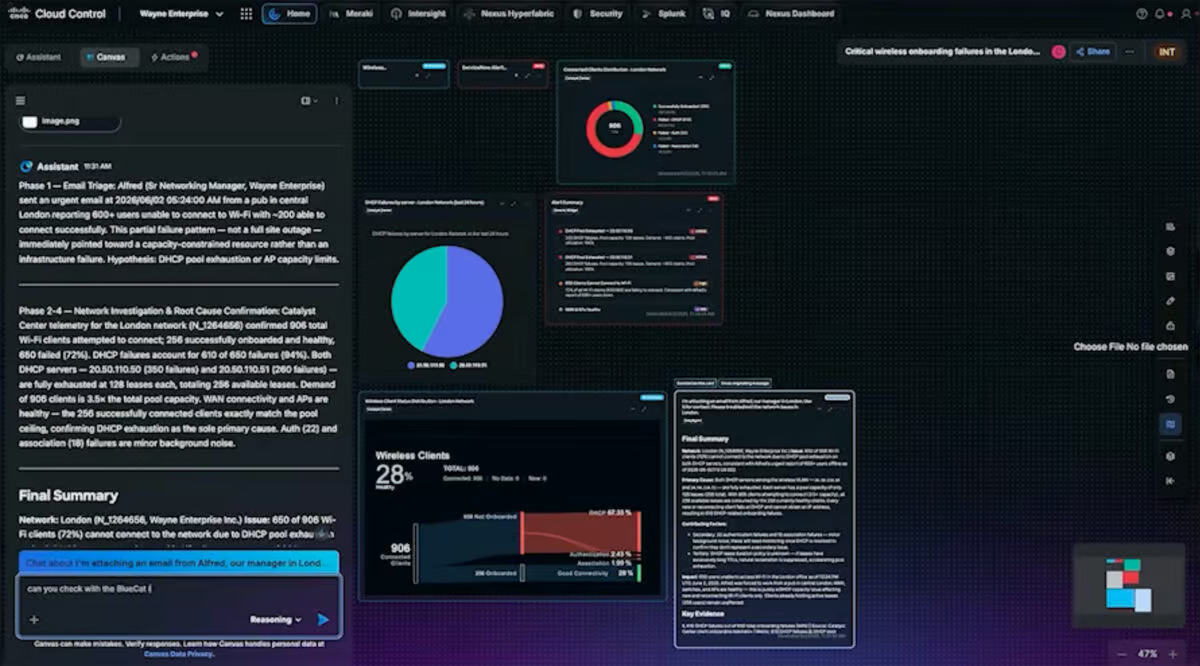
To see a demo in action from Cisco Live 2026, you can watch this segment on BlueCat’s integration with Cisco Cloud Control from Cisco Cloud Control and AgenticOps: Reimagining Enterprise Operations. In the demo, BlueCat’s integration with Cisco Cloud Control is used to triage a critical Wi-Fi failure, with DHCP pool exhaustion the suspected cause. The issue is remediated by adjusting the DHCP scope, all without ever having to touch the product.
BlueCat’s role in the future of agentic operations
As organizations move toward agenti operations, infrastructure intelligence becomes increasingly important.
AI agents need trusted data sources. Network teams need confidence that an accurate infrastructure context underpins operational recommendations. Security teams need visibility into the dependencies and relationships that underpin digital services.
BlueCat’s integration with Cisco Cloud Control reflects a simple reality: better operational outcomes require better infrastructure context.
By extending authoritative DDI intelligence into Cisco Cloud Control, BlueCat ensures that one of the most critical sources of truth on the enterprise network informs AI-driven investigations.
The future of operations is built on better context, not more dashboards. And for network infrastructure, that context starts with authoritative DDI data.
There are additional ways to integrate BlueCat DDI context into your Cisco networking and security toolkit, too. Learn more about all BlueCat’s integrations with Cisco.
About Author